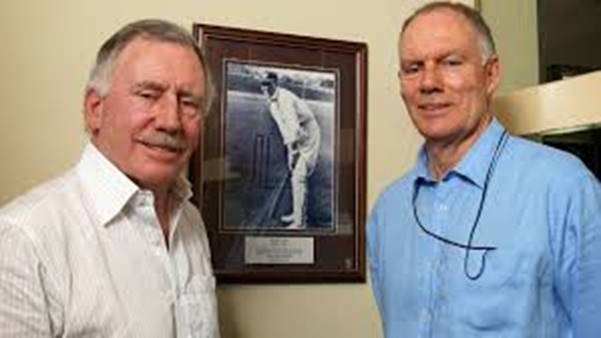
Ian Chappell and Greg Chappell – Herald Sun
The Siblings
By Dr Asif Javed
Williamsport, PA
Greg Chappell, the former Australian test cricketer, was recently in the news. He, along with several other former cricketers, issued an appeal for more humane treatment of Imran Khan. In the 70s and early 80s, Greg Chappell was one of the finest batsmen and a successful captain of Australia. He had succeeded Ian Chappell, his older brother, who was also a good batsman, and had also captained Australia. It looked somewhat strange to have two brothers captain their country. But there have been several examples of siblings, in sports and in other fields, who have excelled, sometimes in the same profession. What follows is by no means a complete list.
Great Hanif Mohammad was followed by Mushtaq and Sadiq Mohammad. Sadiq was mediocre. But Mushtaq was a reliable middle-order batsman and a decent spinner. Though not in the class of Hanif as a batsman, he more than compensated for that by his shrewd captaincy. Pakistan won several test series under Mushtaq, including a 2-0 win against India. The triumph at Sydney in 1977, that announced Imran’s arrival as a genuine fast bowler to the world, was also under Mushtaq’s captaincy.
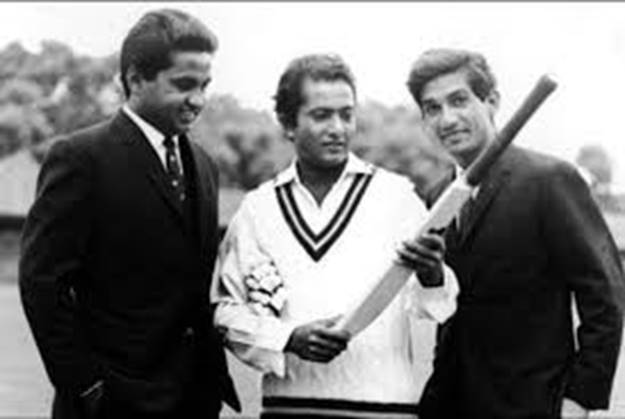
Mushtaq, Hanif, and Sadiq - ESPNcricinfo
In hockey, there were Samiullah and Kalimullah. It is hard to believe a more graceful hockey player than Samiullah. His breathtaking sprints in the left flank were a treat to watch. He was called flying horse for a reason. Kalimullah, who played in the right flank, was also very good though not as fast as Samiullah. A third brother, Hidayatullah, did also play in the national hockey team but he was not in the same class.
Also in hockey, there was Hamidi who led Pakistan to Olympic glory at Rome in 1960. He was followed by Rashid Junior, his younger brother, who played for years as center forward and later captained Pakistan. Interestingly, Rashid Junior appeared quite slow in the field until he was fed the ball inside the D where he was lethal.
Manzoor-ul-Hasan played as right full back for years and formed a formidable defense at the back along with Munawar-uz-Zaman. Manzoor’s younger brother, Rashid-ul-Hasan used to play as right half. Hasan brothers had come from Gojra, a small town near Faisalabad that provided several hockey players to the national team. And then there were Dar brothers: Munir Dar played as a full back and was nick-named Diwaar-e-Cheen due to his solid defensive skills. His younger brother Tanvir, also played full back for the national team for several years. A good penalty corner hitter, Tanvir was the top scorer in 1971 World Cup. His later career was plagued by issues with physical fitness.
Waugh brothers from Australia were twins. Both were very good batsmen. Under Steve Waugh’s captaincy, Australia won unprecedented sixteen test matches in a row and won the 1999 World Cup. He remains the most successful test cricket captain in history with a winning ratio of 72%.
Martin Crowe of New Zealand was one of the finest batsmen of his time while his older brother Jeff was
team like NZ, Martin Crowe did not quite receive the recognition that he deserved. Unfortunately, Martin Crowe died of Lymphoma several years ago.
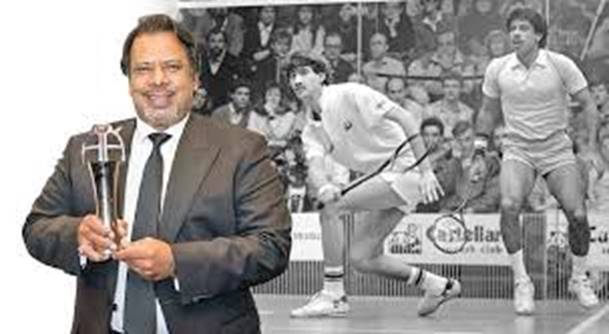
Jahangir Khan and Torsam Khan - magtheweekly
Jahangir Khan is a legend in squash and believed to be GOAT. How his squash journey began is not widely known. He had an older brother Torsam Khan, a promising young squash player, who collapsed on the squash court and died of a brain hemorrhage. Torsam did not live long enough to get to the top. But his tragic death provided the inspiration for a young Jahangir. Years before Jahangir came along, there was great Hashim Khan who won seven British Open titles. His younger brother Azam Khan followed by four of his own.
There was Gama Rustam-e-Zaman who may have been undefeated in his long wrestling career. His younger brother Imam Baksh had two memorable bouts with Gunga Peehlwan, losing first and winning the second in Lahore. Imam Baksh’s sons - all five of them - were wrestlers. Bholu Brothers had an aura that was broken by Akram’s unceremonious defeat by Anoki in the late 70s. A brief resurgence by Jhara did not last long. That was the end of Gama’s wrestling dynasty.
Serena and Venus Williams exploits in tennis will be hard to replicate: the William Sisters have won thirty majors between them. In heavyweight boxing Klitschko Brothers from Ukraine remained a dominant force from 2004 to 2015. Both were multiple time world champions. The older brother Vitali Klitscho is currently the mayor of Kyiv.
If we look at the show business, there were Kapoor Brothers in India. Raj Kapoor was a very popular actor, producer and director. Though not in the class of Dilip Kumar as an actor, he remained highly successful in
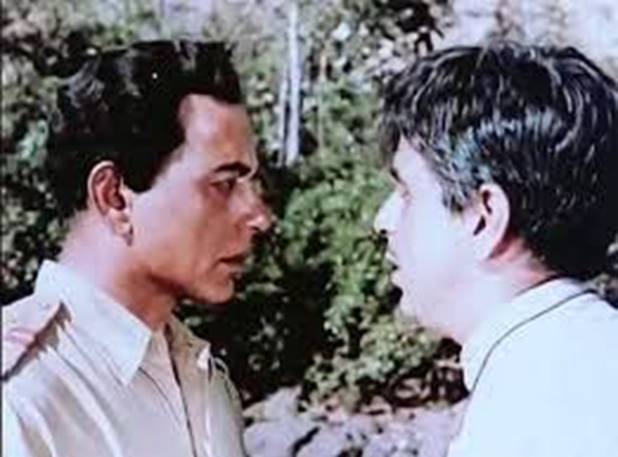
Nasir Khan and Dilip Kumar – Facebook
Bollywood from late 40s through 80s. Shami Kapoor, his younger brother acted in over one hundred films. Shashi, the youngest, also acted in dozens of movies. Late in his career, Shashi played a role in the Pakistani movie Jinnah. Kapoor family’s contribution to Bollywood did not start or end with the Kapoor brothers but the details are beyond the scope of this article.
Dilip remained the undisputed king of Bollywood for decades. His younger brother Nasir Khan, though not as
talented, also acted in several movies. Nasir had an important role in Dilip’s magnum opus Ganga Jamna. Incidentally, Nasir was also the hero in Pakistan’s first movie Teri Yaad but decided not to stick around and returned to India.
Dev Anand was one of the big three of Bollywood along with Dilip and Raj Kapoor. His older brother Chetan Anand was a successful producer and director. His credits include Indian HeerRanjha as well as Haqiqat. Their younger brother Goldie Anand also gave directions in several movies including Guide.
In Pakistan, there were brothers Santosh, Darpan and Suleman. Santosh remained number one hero from the late-50s to mid-60s. Darpan, handsome, flamboyant and somewhat inconsistent, was not far behind while S. Suleman chose to be a director and made several successful movies. Interestingly, all three brothers’ wives, Sabiha, Nayyar Sultana and Panna, were also film actresses.
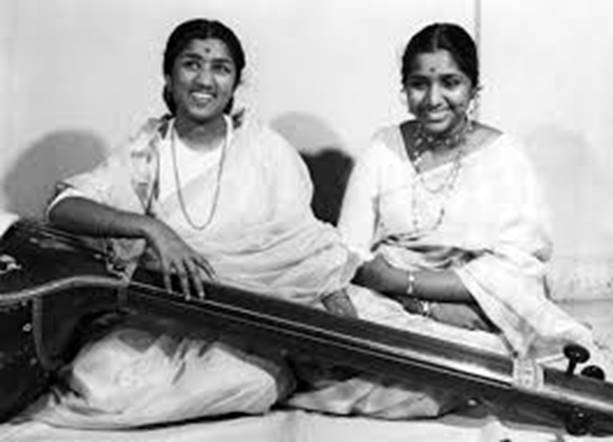
Lata and Asha - Rediff
In music, there was the Mangeshkar family. Lata had everything that a singer needs. She ruled Bollywood for decades. But guess who was a close second behind her? It was her sister Asha Bhonsle. Lata and Asha had come from a family of performers. Their father and brother were both musicians. It is not often that one comes across siblings that have the talent and monopoly right at the top for decades like Lata and Asha did.
Malika-e-Ghazal , Farida Khanum was trained and mentored by her older sister Mukhtar Begum. Mukhtar Begum herself had been a renowned singer in her time. She was married to Agha Hashar.
In classical music, there have been several siblings who often performed together: Nazakat Ali Khan and Salamat Ali Khan from Shaum Chaurasi Gharana were masters of Thumri and Khayal. During one of their performances in India, a visibly impressed, PM Nehru was in the audience. Lata was an admirer of Salamat Ali Khan too.
British actor Richard Attenborough’s credits include The Great Escape,Miracle on the 34 th Street and many others. But his real legacy is Gandhi that he directed and which won several Oscars, including the best picture award. His brother David Attenborough is the renowned naturalist who is still going strong at 99.
Warren Beatty has had a long career in Hollywood. Nominated for twelve Oscars over the years, he finally won it for Reds in 1981 as a director. Reds is the heart wrenching biopic of Reed, an American journalist who became a communist sympathizer and wrote the famous Ten Days Thatshook the World. Shirley MacLaine, Beaty’s sister, who has been acting for seventy years, has also won numerous awards, including an Oscar.
Pitras Bokhari was a genius. He excelled wherever he worked. Cambridge educated, he was an outstanding teacher of Englich at Govt. College, Lahore. He then moved on to be the Director General of AIR a few years before partition where he also performed admirably despite some difficulties working under infamous Sardar Patel. He returned to Govt College as principal and proved an excellent administrator. He took keen interest in the drama club and Majlas-e-Iqbal which were revitalized. Because of his excellence as an English writer, he was asked by the Govt. to accompany PM Liaqat on his tour of USA where he drafted most of the
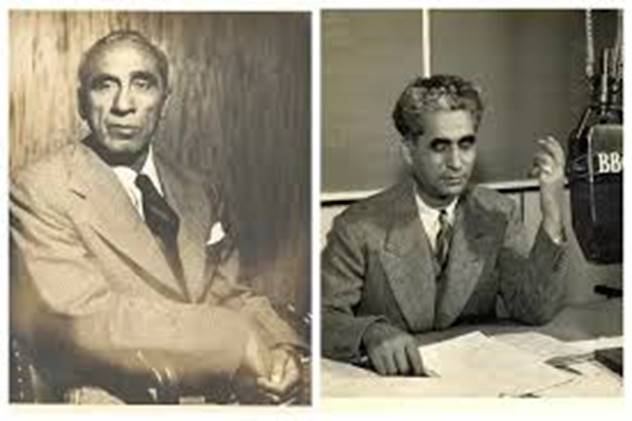
Pitras Bokhari and Zulfiqar Bokhari – Awaz The Voice
PM’s speeches. A good speaker, he was then posted as Pakistan’s permanent representative at the UN where his oratory dazzled the diplomats. The UN Secretary General took notice and selected Pitras to be Under-Secretary of Information. While working for UN, Pitras once visited London and met his friend Ashiq Batalvi. Asked by Ashiq, Pitras admitted that his decision to leave Govt College for a more lucrative job at AIR had been a poor one. Moving away from Niazmandan-e-Lahore had deprived him of the opportunity to do more literary work. Pitras died of a heart attack a few months later. His wish to resume literary work remained unfulfilled. Govt College’s Bokhari Auditorium stands today as a tribute to one of its finest principals.
Zulfiqar Bokhari, Pitras’ younger brother, made Radio Pakistan, essentially one of the best in the Third World. A great administrator, a good orator, with very good command of Urdu and Persian poetry, he trained a whole generation of people including actor Mohammad Ali. Faiz Ahmad Faiz once said that there were only a few people that he would read his new verses to. Bokhari Brothers were on that list. Zulfiqar Bokhari’s life was spent under the shadow of his more illustrious brother. But there are some, like broadcaster Hamid Nasim, who consider Zulfiqar Bokhari even more talented than Pitras.
Back in the early 70s, when this writer was at Govt College Lahore, there was a lot of buzz about Khosa brothers. They were then in senior classes and rumor had it that they were the best of the best. Though our batch never saw any of them, and most of us forgot about them, years later, all three of them emerged on the national scene: one became CJ of Supreme Court, the second Chief Secretary of Punjab while the third made it to the upper echelon of the police service.
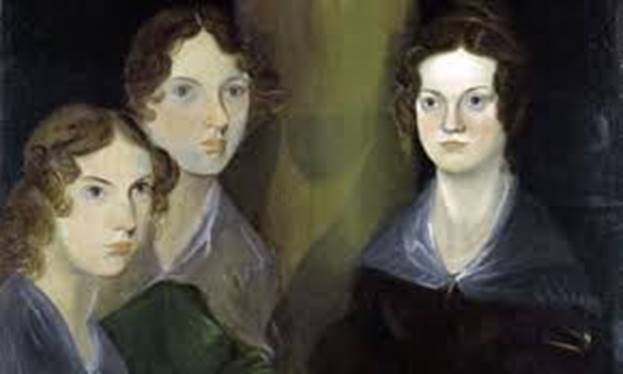
The Bronte Sisters – The Guardian
In the literary world, we find several examples of siblings who excelled. There were Bronte Sisters of Haworth. Emily Bronte’s Wuthering Heights has been filmed again recently for the umpteenth time. Jane Eyre, by the older sister Charlotte, is a classic. Back home, there were sisters Khadija Mastoor and Hajira Masroor who created quite a name for themselves as did Ismat Chughtai and her brother Mirza Azim Beg Chughtai.
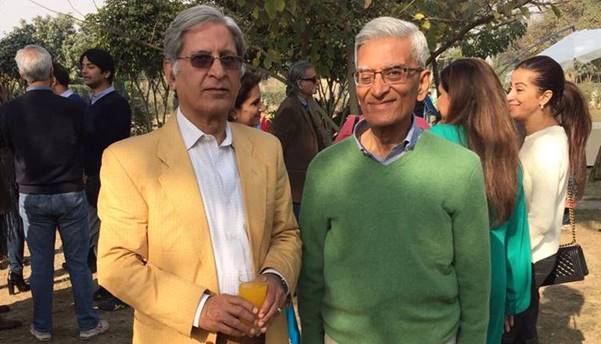
Aitzaz Ahsan and Dr Ijaz Ahsan – The News International
Khwaja Khurshid Anwar was a colossus as a musician. He came from a highly educated family that had no prior connection with music. Multi-talented, Khurshid Anwar also produced, directed and wrote the stories, screen plays and dialogues of several movies. Although no other sibling of his went into show business, they did quite well in their fields. One of his brothers became the editor of Pakistan Times while another, Khwaja Sultan, was the leading criminal lawyer at Lahore High Court.
Aitzaz Ahsan remained a topper throughout his career. Having stood first in the CSS, he chose not to join the Civil Service and pursued law and politics. He made quite a name for himself in both. His older brother Dr Ijaz Ahsan, equally talented, was one of the youngest recipients of FRCS, a superb and ethical general surgeon, and served as Principal of King Edward Medical College, Lahore. Dr Ijaz Ahsan, an upright man, later resigned from that prestigious position as a matter of principle that does not happen often in Pakistan. Such was his character.
(The writer is a physician in Williamsport, PA and may be reached at asifjaved@comcast.net)