
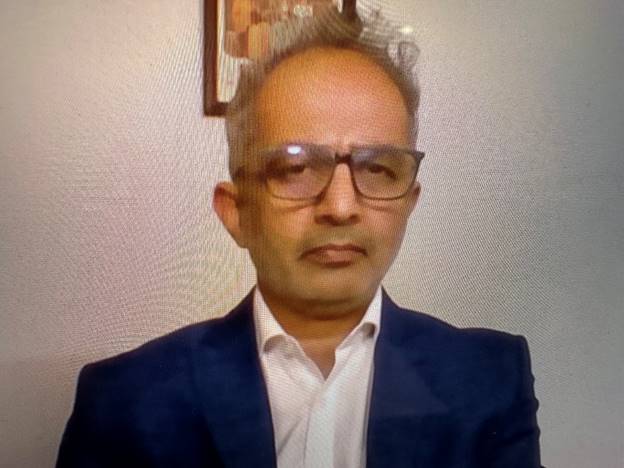
Ali Salman
 Michael Appel

Michael Kugelman
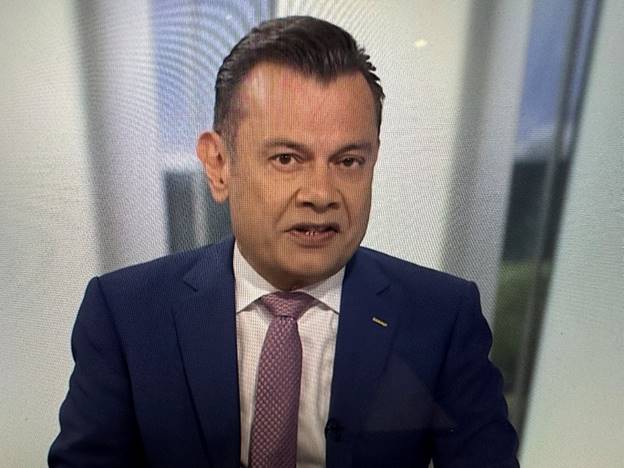
Rishaad Salamat
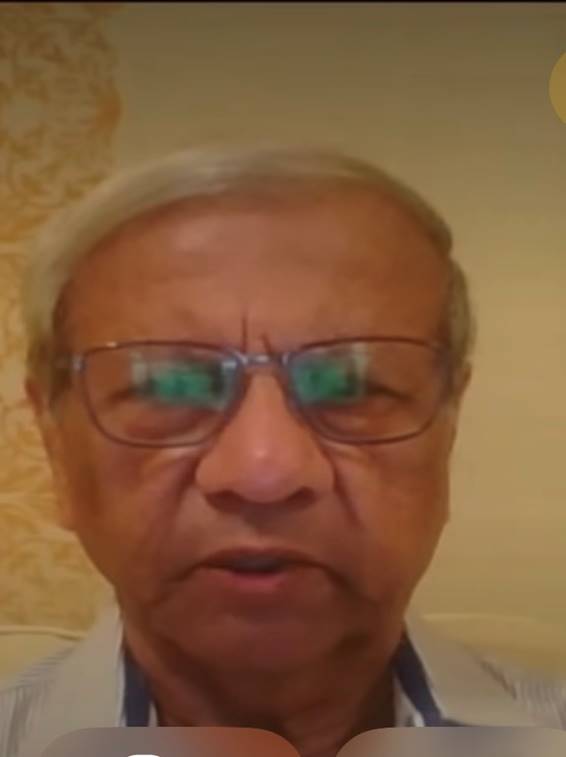
Kaiser Bengali
Al Jazeera’s ‘Inside Story’ Spotlights Economic Impact of War on Pakistan
By Elaine Pasquini
Washington, DC

Rishaad Salamat, host of Al Jazeera’s Inside Story current affairs program, discussed the economic and energy costs of the war in the Middle East on Pakistan with experts on April 5, 2026.
Soon after the US-Israeli war on Iran began, its ripple effects were evident with Pakistan standing out as one of the countries paying a significant price, Salamat said. Heavily dependent on energy supplies from the Gulf, economists are warning that if the war drags on and the Strait of Hormuz does not stay open the fallout could be unprecedented.
Michael Appel, an AJ senior producer, reported that five weeks into the war the oil carried by Pakistani-flagged vessels which have been allowed to pass through the Strait costs more on the global market, which increase is immediately felt at the pump. Compounding the misery, the energy crisis comes as Pakistan prepares for higher demand during the hotter summer months.
Being heavily dependent on the Strait, as Pakistan imports 85 percent of its crude oil from Saudi Arabia and the United Arab Emirates and nearly 20 percent of its liquified natural gas – all of which pass through the waterway – has pushed Karachi to emerge as a major transit hub for the vessels diverted away from the Gulf. In just 24 days, this deepwater Pakistani port has handled a year’s worth of container ships.
To ease the pressure, Islamabad has rolled out emergency relief measures, such as a four-day week for some government offices, extended school holidays and online-classes. “But these are temporary solutions and the fact remains that Pakistan is facing another cash crunch compounded by a geopolitical crisis,” Appel said.
Michael Kugelman, senior fellow at the Atlantic Council, pointed out that Pakistan relies heavily on hydrocarbon imports from the Middle East. “There’s a high-growing demand for these energy sources at home and domestic production simply can’t keep up,” he explained. “Pakistan, to this point, hasn’t been able to sufficiently diversify its sources of energy imports and its hydrocarbon imports beyond the Middle East.”
Remittances are also an important factor. A significant number of Pakistani expatriates live and work in the broader Middle East, particularly in the GCC countries, and the remittances they send home are critical to the economy. “If that’s interrupted by conflict, then you are going to have problems for the economy,” he warned.
Pakistan’s inherently weak economy is particularly vulnerable to global economic shocks. Among factors contributing to this, Kugelman said, are an export strategy that is not diversified, high levels of debt and continuing cycles of crises, including massive flooding related to climate change.
Funding from the International Monetary Fund, however, has helped Pakistan’s macroeconomy, although “Pakistan nearly defaulted on its loans just a few years ago, so it’s just inherently vulnerable,” Kugelman said. “And I think that helps explain why it’s in the situation it is in today.”
Regarding the microeconomy, poverty levels, along with household income figures, continue to be concerning and “that is where the vulnerability lies,” he stated.
Another challenge for Pakistan is investor concerns about terrorism which has increased, mainly in the border regions, since the Taliban returned to power in Afghanistan in 2021. As the Pakistani government is trying to draw in more investment to strengthen its various sectors, “if this terrorist challenge continues to resurge, that’s going to be a problem,” he said.
One of Pakistan’s successes over the last few years, however, is the embrace of solar power. Immediately following the Russian invasion of Ukraine when energy prices increased, many Pakistani households and companies began to install solar panels. “We’ve seen these used to a significant extent to the point that I think it’s become a bit of a cushion to the blow of these high energy prices,” Kugelman said. “This is not a government policy. This is not the case of the government going green. It’s really a grassroots effort on the part of many Pakistanis to simply opt for the cheapest source of energy.”
Ali Salman, founder and CEO of the Islamabad-based think tank, Policy Research Institute of Market Economy (PRIME), noted Pakistan has made significant improvements in some areas of its economy, including the exchange rate, more privatization programs, and trade tariff reforms. “I think Pakistan has actually been on the right track for the last year and a half as far as structural reforms are concerned,” he said.
Pakistan was just entering a growth phase when “suddenly pressure from the import side due to the Middle East crisis arrived,” he added, making it difficult for Pakistan to manage.
Salman expressed concern that the crisis could affect the education sector. But moving education online is a “luxury which is only available in urban parts of Pakistan and not in rural areas,” he lamented. “The government documents that about 25 million children who should be in the schools are out of schools,” and there would be a significant social cost to shifting to online education.
Economist Kaiser Bengali, former head of the policy reform unit for the chief minister of Baluchistan, noted for the past two decades Pakistan created an economy that is import-dependent for oil, food and cotton for the country’s important textile industry. “We are paying the price today of excessive dependence on imports for basic commodities,” he lamented. “We are paying the price of that misgovernance.”
He also noted Pakistan’s longstanding massive deficit has been covered by taking loans. “Now we are taking loans just to repay past loans,” he said. “This is not how you run an economy.”
The re-structuring of both fiscal and foreign trade is necessary, Bengali argued. “I think structural changes need to be made if Pakistan is not to face similar situations in the future, and for the present, we just have to survive whichever way we can.”
In conclusion, he noted Pakistanis have lived with all kinds of crises for the last half a century and learned how to manage. “I think the people, even the poor, will learn how to cope and adjust and try and keep their head above water,” he said. “And once this particular crisis is over… the people, the poor, will be able to start rebuilding their lives again.”
(Elaine Pasquini is a freelance journalist. Her reports appear in the Washington Report on Middle East Affairs and Nuze.Ink.)
