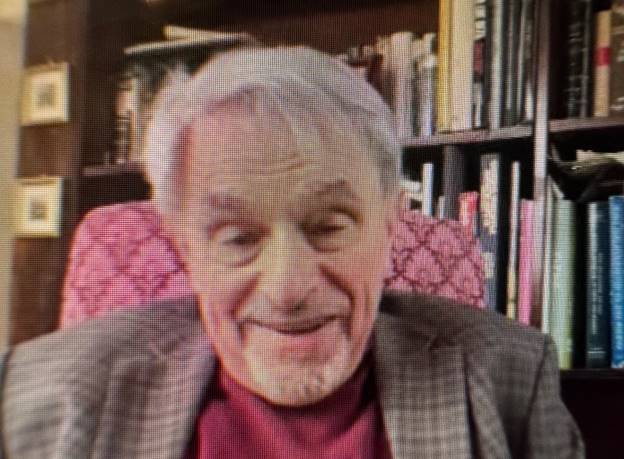
Ambassador Patrick Theros
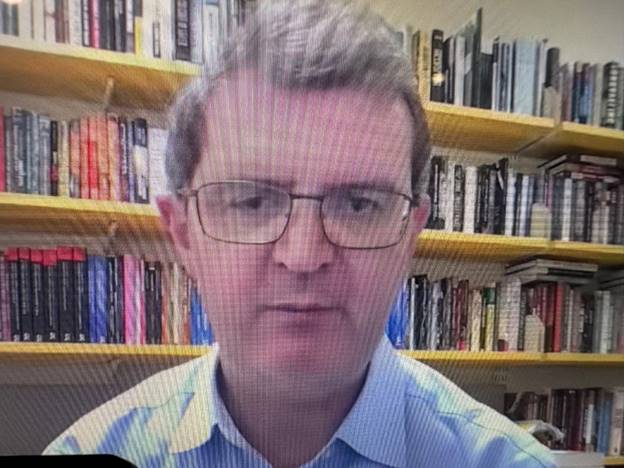
Kristian Coates Ulrichsen
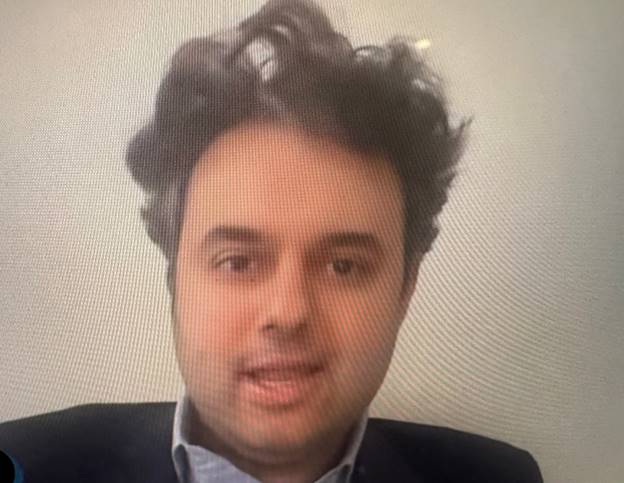
Samuel Ramani
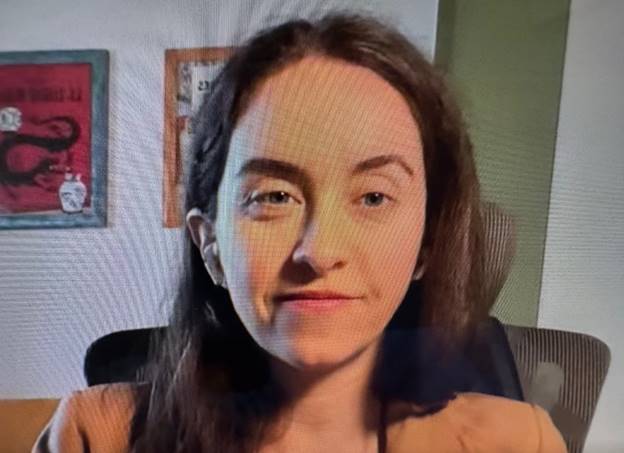
Cinzia Bianco
Gulf International Forum Spotlights European Responses to US-Israel War on Iran
By Elaine Pasquini
Washington, DC: Ambassador Patrick Theros, strategic advisor and senior fellow at the Gulf International Forum (GIF), hosted an online discussion on March 13, 2026, addressing the ongoing US-Israel war on Iran.
Opening the program, Theros noted Europe now confronts an energy crunch as Iran’s leaders have vowed to keep the Strait of Hormuz closed, effectively halting nearly one-fifth of the world’s oil flow.
Meanwhile, Europe’s strategic freedom is constrained by geopolitics, he said. Russia’s war in Ukraine remains a priority and European security still depends on continued US support for Ukraine, which hinges on decisions in Washington. “In effect, Europe now faces an energy blockade and a regional war that are largely driven by the whims of foreign leaders,” Theros opined.
Public reaction in Europe is strongly against the Gulf war. In some countries this has bolstered governments which took a cautious stance, while in others, it has polarized society. In short, Europe is caught between energy security, a defense gap and limited political leverage. “We can hope for a swift diplomatic break, but for now we must manage the consequences,” he said. Europe’s fate may hinge as much on the unpredictable choices of leaders in Washington, Moscow and Tehran as on anything decided in Brussels or Berlin.
“We are facing a crisis that if not existential is going to be pretty painful for the world economy if not brought to an end fairly quickly,” he added.
Kristian Coates Ulrichsen, an expert on Gulf politics at the Baker Institute for Public Policy at Rice University and senior non-resident fellow at the GIF, said there was a strong sense of political uncertainty in the UK as to how to respond to this new Middle East war. British Prime Minister Keir Starmer has strongly stated his opposition to being a part of the current military offensive against Iran.
The conundrum is that the UK has incredibly close political links with both the United States and Gulf countries that are being targeted by Iran. “I think that especially as the conflict generates blowback against the Gulf states this will become politically easier for the UK to step up its involvement if it can be justified on the basis of defending close partners in the Gulf against these retaliatory attacks,” Ulrichsen said. “I think framing it in those terms will be something that the Starmer government will use to gradually deepen Britain’s involvement.”
Ulrichsen suggested the Gulf states’ largest point of leverage on President Trump, however, would be cutting back on the investment of their sovereign wealth funds in the United States, pointing out that collectively they’ve pledged more than $3 trillion of investments in the US.
Cinzia Bianco, visiting fellow at the European Council on Foreign Relations, stated her thoughts on European counties’ perception of the war, noting that, with the exception of Spain which has articulated its opposition very clearly, “They view this war as a war of choice, and they believe that it has been an operation outside of the international law. I think there are no major divergencies between European Union countries on how they look at the war and what they think about it.”
Europe, she said, is acknowledging that Gulf security is intrinsically linked to European security in terms of energy and economics and that there are growing political, geopolitical and defense relations between the Europeans and their Gulf counterparts that they want to cultivate.
“I think we have actually seen quite a unique convergence, not just among Europeans but also between the Europeans and the Gulf factors,” she summarized. “With some differences, I would have to say they are broadly aligned.”
Italy and France have deployed air defense in support of their Gulf allies and partners, she continued. They are in negotiations for an expedited sharing of defense technology to beef up the stockpiles of interceptors and other defense systems that are running low in Saudi Arabia and the UAE. “I’m hearing that there will be further follow-up deals in that direction,” she added.
Asked if the Europeans are pushing Trump to say he won, declare victory and go home, Bianco said they are involved in encouraging a diplomatic offramp to end the conflict. “Nobody thinks that Trump is actually in for a long war. They don’t believe that is his intention.”
Samuel Ramani, a non-resident fellow at GIF, CEO of Pangea Geopolitical Risk and associate fellow at the London think tank Royal United Service Institute, pointed out that Russia maintains a clear policy of “flexible diplomacy” in the region. A “friends-with-all, enemies-of-none, kind of allies-of-none approach which allows them to manipulate relationships with different powers.” Russia is very invested in maintaining strong relationships with all the Gulf countries especially its strategic partnership with the UAE which is probably its most important and far-reaching in the Gulf region.
In addition, Russia maintains a wide-ranging partnership with Saudi Arabia that it wants to protect and LNG partnerships with Qatar, as well as potential investments in the Qatari Investment Authority, he said.
“So, the Russians want to maintain even-handed relationships,” Ramani stated. “They’re going to stay out of this, and they see themselves as beneficiaries because of rising oil prices and because America is in a quagmire.”
As far as an offramp to end the war, Ramani expressed his view that when it becomes clear that deploying ground forces – which is unpopular in the United States – is the only way to dislodge the regime, and if the economic and stock market costs become prohibitively high, “Trump will probably declare victory in some form and justify that victory by highlighting the destruction of nuclear, ballistic missile, naval and other assets.”
(Elaine Pasquini is a freelance journalist. Her reports appear in the Washington Report on Middle East Affairs and Nuze.Ink.)