Image Shutterstock
A New Form of Guerrilla War
By Justice Markandey Katju
Former Judge
Supreme Court of India
Delhi, India

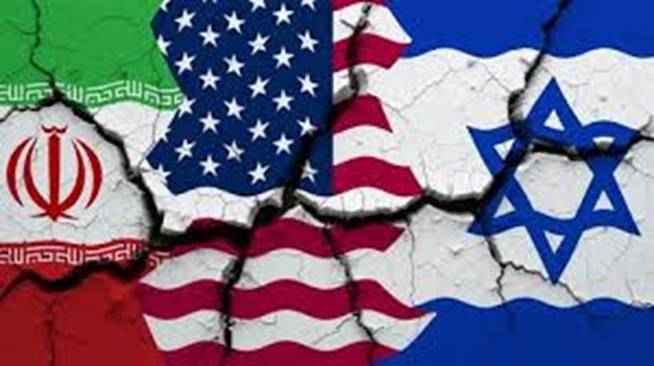
When American and Israeli forces attacked Iran, one would have thought the Iranians would quickly surrender and the war would be over in a few days. After all, Iran is a relatively underdeveloped country and was not expected to withstand for long an attack by the most powerful industrial and military nation in the world.
But what has actually happened is quite different. The war, begun by the US-Israeli attack on 28th February 2026, has been going on for 5 weeks now, with no sign of an Iranian surrender. Rather, attacks by Iranian missiles and drones on Israel and US bases and assets in Middle Eastern countries continue unabated, causing astonishment throughout the world and consternation among the aggressors.
How does one explain this?
It is trite that, to fight against a more powerful enemy, one has to resort to guerrilla warfare and avoid direct confrontation.
Thus, in the American War of Independence (1775–81), guerrilla warfare was often used by the Americans against the British army.
In fighting Napoleon, the Spaniards resorted to hit-and-run tactics, making Napoleon speak of the “Spanish ulcer.”
When Napoleon invaded Russia in June 1812, the Russian commanders Generals Barclay de Tolly and Mikhail Kutuzov kept retreating into the depths of Russia instead of engaging in a head-on confrontation with the much more powerful Grande Armée, and also resorted to scorched-earth tactics and partisan warfare.
The Chinese Red Army used guerrilla warfare as its main tactic in fighting against the Japanese, as did the Vietnamese in their fight, first against the French and then against the Americans.
The traditional method of guerrilla warfare was hit-and-run tactics. But new situations have led to the creation of different forms of guerrilla warfare to deal with these new conditions.
For instance, the Iranians are fighting the much more powerful US-Israeli forces using guerrilla tactics, but of an entirely different kind. Let me explain.
(1) Hitherto, guerrilla warfare, that is, hit-and-run tactics, was used against an enemy that attacked using ground troops. In fact, there were no aircraft at the time of the American War of Independence and the Napoleonic Wars (the first aircraft was invented only in 1903).
The Japanese too used mostly ground troops in their invasion of China from 1937 (most of their planes were used in fighting the Americans in the Pacific theater).
However, in the Vietnam War, the Americans used jet bombers and helicopters on a large scale, while the Viet Cong and NVA forces in the South had only ground troops. Consequently, the Vietnamese built deep tunnels below the ground (e.g., in Cu Chi), where their troops would be safe from air attacks.
It seems that the Iranians have learned from the Vietnamese, like good disciples. They realized that their air force could be quickly destroyed by US and Israeli jets, and their military assets, e.g., missile and drone launchers, would be quickly destroyed by US-Israeli air power if based on the surface.
Hence, for a long time they had been building entire cities deep underground (some say as deep as 300 feet), where American-Israeli bombs could not reach. From these places, the Iranians launch their missiles and drones. Factories for manufacturing missiles and drones, and research facilities, are also said to be located there.
This is a new form of guerrilla warfare and shows the intelligence and creativity of the Iranians.
(2) Another form of guerrilla warfare being used by the Iranians is economic warfare. By closing the Strait of Hormuz, they have caused prices of oil and gas, and the cost of living, to rise for ordinary Americans, who have consequently launched massive protests in most cities across the United States. This is bound to erode the will of the US government, as it did during the Vietnam War.
The Vietnam War did not affect the world economy, but the Iranian war has done so by raising oil and gas prices everywhere. For instance, as of April 2026, LPG cylinder prices in India have surged due to supply disruptions and rising global oil costs caused by the US-Iran conflict.
This has made the war unpopular worldwide.
(3) A third new form of guerrilla warfare being used by the Iranians is what Robert Pape has called the escalation trap and “horizontal escalation.”
This means Iranian missiles and drones striking US bases and assets in all Middle Eastern countries that host them.
Some people may think that this increases the number of Iran’s enemies, as Middle East countries will become hostile to Iran. But what such people forget is that while the governments of such countries are pro-American, their people are not. This horizontal escalation helps the Iranians.
(4) Iranian missiles and drones are cheap, costing about $20,000 each, while American missiles, including interceptors, are very expensive, costing millions of dollars each.
In this way, the Iranians are financially bleeding the Americans. Thus, they have created new forms of guerrilla warfare that could be used by relatively less developed countries everywhere against powerful foes.
(Markandey Katju is an Indian jurist and former judge of the Supreme Court of India who served as chairman of the Press Council of India from 2011 to 2014)