
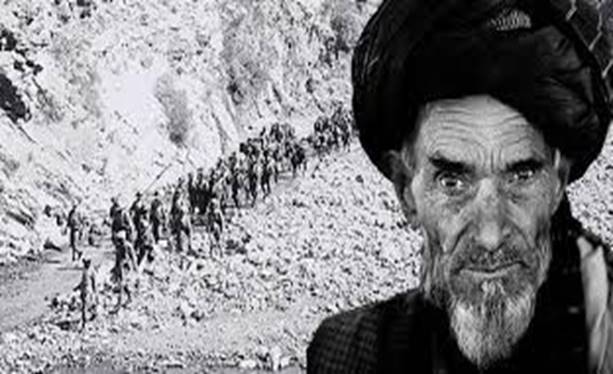
The Pashtuns are an ancient mountainous people living along the Pakistan-Afghan border
The Story of a Noble People: Reassessing History of the Pukhtuns
By Dr Akbar Ahmed
American University
Washington, DC

The historiography of South Asia has long privileged imperial and urban narratives, often marginalizing frontier societies whose histories are equally rich yet comparatively understudied. Among these, the Pukhtun (Pashtun) people occupy a distinctive position. Spanning the borderlands of present-day Pakistan and Afghanistan, they constitute one of the largest ethnolinguistic groups in the world, with a historical footprint extending across Central and South Asia. The book under review, History of the Pukhtuns by Qazi Ataullah Khan, translated into English by Brigadier Abdul Samad Khan, represents a major contribution in this imbalance. It is both a scholarly and cultural project: an effort by “sons of the soil” to narrate their own past and challenge externally imposed representations.
Historiographical Context and Significance
The Pukhtuns have often been framed through reductive colonial tropes, particularly that of the “martial race,” emphasizing violence and tribalism. Such representations obscure a far more complex ethical and intellectual tradition. The emergence of the nonviolent Khudai Khidmatgar movement under Abdul Ghaffar Khan—rooted within Pukhtun society—directly challenges these assumptions. It demonstrates that traditions of restraint and moral discipline were intrinsic to the culture, not externally imposed.
In this context, History of the Pukhtuns must be situated alongside books on the Pukhtun by Olaf Caroe, Evelyn Howell, Frederick Barth,
Dr Andre Singer and Charles Lindholm. While these foreign scholars made important contributions, their perspectives were largely external. Ataullah Khan’s work, by contrast, offers an internal narrative grounded in indigenous memory, oral tradition, and lived experience. The translation by Abdul Samad Khan further expands its reach, transforming a regional text into a work of broader academic relevance. History of the Pukhtuns complements other native works on the Pukhtun such as that of Sultan-i-Rome and the autobiography of the Wali of Swat. Several distinguished physicians from Khyber-Pukhtunkwa (KP) province, now living in the United States, including Dr Amjad Hussain and Dr Nasim Ashraf, who has just published Ring Side, have provided us insights into their home province. We also have high-quality contemporary academic scholarship on the Pukhtun by female Pakistanis with a link to the province like Dr Amineh Hoti, who has a PhD from Cambridge, and Dr Faryal Leghari with a PhD from Oxford.
Structure and Method
The book at hand relies extensively on tribal histories and theories, genealogical charts, oral traditions, and historical anecdotes. These are not treated as supplementary but as central sources. In societies where written archives are limited, such materials are essential for reconstructing historical consciousness. Ataullah Khan maintains a disciplined focus on the past, prioritizing long-term historical developments over contemporary political commentary.
A central feature is the genealogical tradition tracing descent from Qais Abdur Rashid and his sons—Saraband, Betan, and Gurgusht—who are presented as foundational figures in Pukhtun identity. While rooted in oral tradition, these narratives continue to shape collective understandings of lineage and belonging.
Debates on Origin
One of the most striking aspects of History of the Pukhtuns is its presentation of competing origin narratives. On one hand, the book recounts the widely accepted story of Qais Abdur Rashid’s encounter with the Prophet of Islam, situating Pukhtun identity within an Islamic genealogical framework. On the other hand, it references an Aryan origin theory, linking Pukhtun ancestry to Central Asia and Bactria.
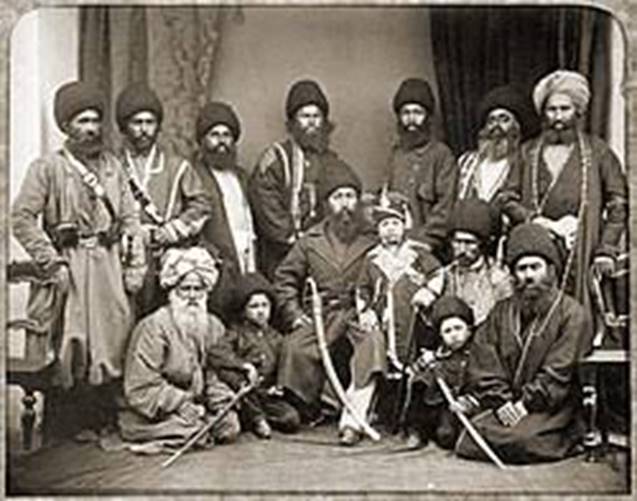
The book relies extensively on tribal histories and theories, genealogical charts, oral traditions, and historical anecdotes – Photo Wikipedia
Rather than resolving this contradiction, the author presents both accounts, reflecting the layered nature of identity formation. This duality underscores the coexistence of mythic and historical narratives and invites critical engagement with the role of tradition in shaping historical consciousness.
Ahmad Shah Abdali and the Ideal of Kingship
A particularly significant section of the book is devoted to Ahmad Shah Abdali (Ahmad Shah Durrani). In Chapter 10, “Ahmad Shah: personality, character and attributes” (p. 129), he is portrayed as the archetypal Pukhtun ruler—combining military strength with moral integrity.
There is fascinating material on the Durrani Empire, the pride of the Pukhtuns. Ahmad Shah is described as the King of the Pukhtun and is depicted as the ultimate Pukhtun ideal warrior-king. The narrative emphasizes his ethical principles, including his injunctions against cruelty and his commitment to humane governance. He advised his crown prince never to cut the ears or noses of human beings as was the custom and never be mean to people and never hurt them.
His personal character was simply fascinating, the vices and wayward ways that were prevalent at the time in the ruling classes of the East were alien to his nature. Ahmad Shah embraced diversity and his inclusive approach—accepting those who spoke Pashto as part of the Pukhtun community—highlights a flexible and culturally grounded understanding of identity. He emphasized compassion, unity and harmony.
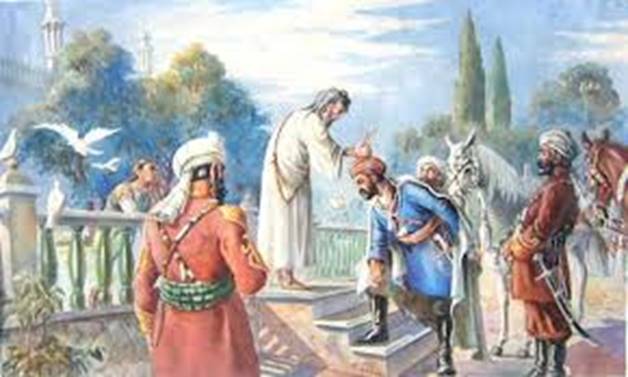
Coronation of Ahmad Shah Abdali (Ahmad Shah Durrani) in 1747 – Drawing by Breshna, the famous contemporary Afghan artist
Cultural and Political Contributions
The book situates the Pukhtuns within broader regional and global contexts. Historically, Pukhtun dynasties ruled from Delhi, and individuals of Pukhtun origin have held prominent positions, including the highest posts in the land, in Kabul, Islamabad, and New Delhi.
In modern times, figures such as Imran Khan in sports and politics, and cinematic icons such as Dilip Kumar (Yousuf Khan), Madhubala (Mumtaz Begum), and Shah Rukh Khan, illustrate the wide-ranging cultural influence of the Pukhtun community.
These references serve to counter narratives that marginalize Pukhtuns as peripheral actors, instead emphasizing their central role in shaping South Asian history and culture.
Author and Translator
Ataullah Khan’s biography adds depth to the work. Educated at Aligarh University, he joined the Khudai Khidmatgar movement and endured multiple imprisonments under British rule. His later role as
Minister of Education in the NWFP (now KP province) reflects his engagement with both intellectual and political life.
The translator, Abdul Samad Khan, brings a similarly rich background, combining military, academic, and professional experience. His reflections highlight the scarcity of indigenous scholarship on the Pukhtuns and underscore the importance of this work as a corrective to external narratives. I recall him as a friend from our school days in Burn Hall, Abbottabad, as a gentle and thoughtful soul. He was destined to bring History of the Pukhtuns to the world. For both author and translator this book is a labor of love.
Critical Assessment
The book’s strengths lie in its breadth, its integration of oral and written sources, and its commitment to
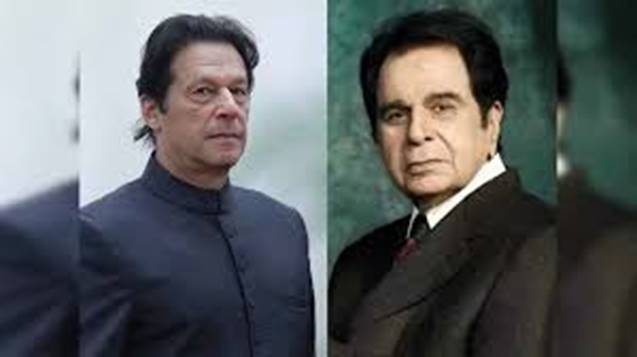
In modern times, figures such as Imran Khan in sports and politics, and cinematic icons such as Dilip Kumar (Yousuf Khan), Madhubala (Mumtaz Begum), and Shah Rukh Khan, illustrate the wide-ranging cultural influence of the Pukhtun community
indigenous historiography. However, its reliance on oral traditions raises questions of source verification, and its limited engagement with contemporary historiographical debates may constrain its analytical depth.
At times, the narrative adopts a normative tone, particularly in its portrayal of figures such as Ahmad Shah Abdali. While culturally resonant, this may invite critique from scholars seeking a more critical framework.
Conclusion
History of the Pukhtuns stands as a landmark contribution to South Asian historiography. It offers a richly detailed and culturally grounded account of a people whose history has often been overlooked or misrepresented. By integrating genealogical traditions, historical analysis, and cultural reflection, it challenges stereotypes and expands scholarly understanding.
The inclusion of detailed book references, such as Chapter 10 (“Ahmad Shah: personality, character and attributes”), and engagement with both classical and contemporary scholarship enhances its academic value. References to figures ranging from Ahmad Shah Abdali to modern movie stars as we have done underscore the continuity and diversity of the Pukhtun experience.
Ultimately, the work represents an act of intellectual reclamation. It affirms the importance of self-representation in historical writing and invites further scholarly engagement with the complex and rich legacy of the Pukhtun people.
Before I close, for the sake of transparency, I will mention my links to the Pukhtun people. My mother was the daughter of Sir Hashmatullah Khan, a Barakzai Pukhtun, my wife Zeenat is the granddaughter of the Wali of Swat and my daughter Dr Amineh Hoti is married to Arsallah Khan Hoti of the Hotis of Mardan. My PhD is based on fieldwork among the Mohmand tribe and I have served among and written about the Pukhtun. I have had the honor of serving in all the provinces of Pakistan, but the KP province is special as it is my home province.
(Ambassador Akbar Ahmed is Distinguished Professor of International Relations and holds the Ibn Khaldun Chair of Islamic Studies at the American University, School of International Service. He is also a global fellow at the Wilson Center Washington DC. His academic career included appointments such as Nonresident Senior Fellow at the Brookings Institution; the First Distinguished Chair of Middle East and Islamic Studies at the US Naval Academy in Annapolis, MD; the Iqbal Fellow and Fellow of Selwyn College at the University of Cambridge; and teaching positions at Harvard and Princeton universities. Ahmed dedicated more than three decades to the Civil Service of Pakistan, where his posts included Commissioner in Balochistan, Political Agent in the Tribal Areas, and Pakistan High Commissioner to the UK and Ireland.)
