Across centuries, the Kiswah’s history insists on restraint: symbols are detached from accountability and handled as social capital, they lose their meaning and inflict harm. The Kiswah belongs to the Kaaba—and to the collective conscience of Muslims worldwide. To honor its past is to protect its dignity now. The long, patient labor of artisans and custodians reminds us that faith is preserved not by spectacle, but by care. Any breach of that care is not merely a procedural error; it is a wound to memory, to meaning, and to the millions who face the Kaaba in prayer each day
The Curtain of Kaaba: Sacred Continuity and Broken Trust
By Dr Aslam Abdullah
CA

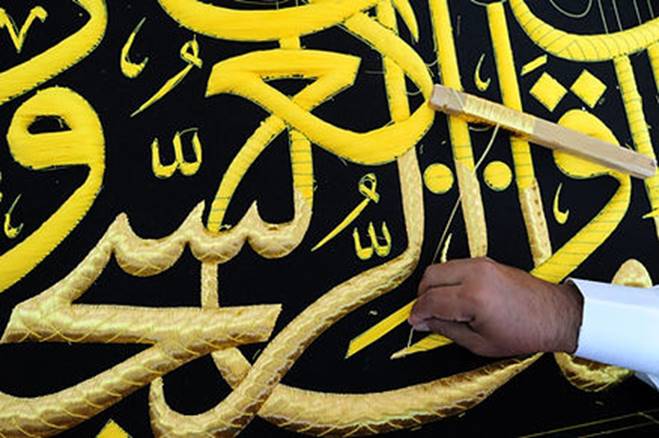
At the heart of Islam stands the Kaaba, the first House devoted to the worship of the One God and the direction of Muslim prayer across the world. Draped over it is the Kiswah—a black silk mantle embroidered with Qur’anic verses in gold and silver—an object whose meaning lies not in luxury, but in reverence. To touch it is to remember humility; to preserve it is to honor a trust shared by generations.
Long before Islam, Arab tribes covered the Kaaba to signal sanctity. With the Prophet Muhammad ﷺ, the practice was affirmed and refined after the restoration of monotheistic worship in Mecca. Early Muslim historians record that the Kaaba was covered as an act of veneration, not possession—an outward sign of inward submission. As the Muslim polity grew, the responsibility for the Kiswah became institutional: the Rashidun caliphs sustained it, the Umayyads formalized its upkeep, and the Abbasids invested artistry and scholarship into its calligraphy.
Under the Mamluks and Ottomans, the Kiswah was produced with extraordinary care, often in Cairo or Istanbul, and carried in solemn procession to Mecca. Each annual replacement—typically during the days of Hajj—marked renewal, not novelty. Retired coverings were handled with dignity: preserved, gifted to respected institutions, or carefully distributed to those who understood their sanctity. What was never acceptable was commercialization or private vanity. The cloth was a trust, not a trophy.
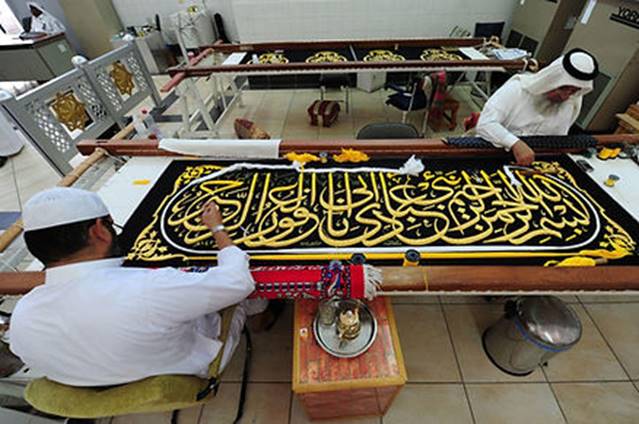
In the contemporary era, production moved to Mecca itself, where artisans weave the Kiswah under strict protocols. The tradition remains governed by restraint and accountability, recognizing that sacred symbols draw their meaning from the values they protect — justice, humility, and human dignity.
It is against this long arc of reverence that reports have caused profound hurt among Muslims: pieces associated with the Kiswah were allegedly sent to Jeffrey Epstein, a figure synonymous with exploitation, blackmail, and abuse. According to unsealed correspondence reported in the press, the logistics were arranged by Dubai-based businesswoman Aziza Al-Ahmadi, working with a Saudi contact, to ship the items for Epstein’s private possession. There is no credible evidence that such a transfer was authorized by any Islamic religious authority or represented Muslim communities.
The Kiswah is not art for display nor currency for favor. It is bound to prayer, repentance, and the dignity of worship. Linking it—however indirectly—to a convicted sex offender collapses the boundary between the sacred and the profane. For Muslims, the pain is moral: a symbol meant to remind humanity of accountability before God appears to have been instrumentalized in the orbit of someone whose life violated the most basic human trust.
Public discussion of Epstein has included allegations about possible intelligence ties. These assertions have been categorically denied. Regardless of the rumor, the ethical issue here does not depend on espionage narratives. It rests on the misuse of a sacred emblem in proximity to proven abuse.
Across centuries, the Kiswah’s history insists on restraint: power is temporary; sanctity endures. When sacred symbols are detached from accountability and handled as social capital, they lose their meaning and inflict harm. The Kiswah belongs to the Kaaba—and to the collective conscience of Muslims worldwide. To honor its past is to protect its dignity now. The long, patient labor of artisans and custodians reminds us that faith is preserved not by spectacle, but by care. Any breach of that care is not merely a procedural error; it is a wound to memory, to meaning, and to the millions who face the Kaaba in prayer each day.
(Dr Aslam Abdullah is the resident scholar at Islamicity.org, the largest internet portal on Islam. He has served as Director of the Islamic Society of Nevada and Masjid Ibrahim, Las Vegas. Dr Abdullah has also been the Editor-in-Chief of the Minaret Magazine since 1989. He was an associate editor of The Arabia in the 1980s. He also served as vice chairman of the Muslim Public Affairs Council. Not only that, but he is involved in interfaith dialogue and has represented Muslims in several interfaith conferences. He has published several books and more than 1,000 articles and papers in magazines worldwide. Originally from India, he is based in Southern California and has appeared on several TV and Radio shows.)